

COLONEL’S WELLCOME
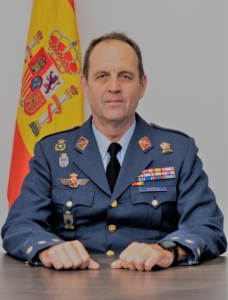
As Commander of the European Tactical Airlift Center (ETAC), it is an honor to address you and extend a warm welcome to this young project, which at just 10 years old, was born from the joint initiative of the EDA (European Defense Agency) together with the Spanish Air and Space Force and a broad group of European nations. In 2016, these nations, together with the EATC, decided to focus on concentrating advanced tactical training for European airlift crews in this multinational organization.
The ETAP is an ambitious program with very low operational costs, aimed at enhancing the tactical capabilities of crews through demanding training in high-threat scenarios. Another important goal of the ETAC is to provide a common ground where participants can advance in the interoperability of both systems and tactics and procedures, while also facilitating training in activities parallel to flying, such as the use of multinational CATOs, MEDEVAC operations, or mutual support in cross-maintenance tasks.
Over two and a half weeks and in itinerant projects across different nations, increasing difficulty is progressively introduced into the scenario. This presents a challenge to the crews, forcing them to focus and think tactically in a sustained manner. It isolates them from the demanding logistical flights required of transport squadrons, allowing them to integrate into a complex, multinational scenario.
Furthermore, the ETAC makes a constant effort to update threats and integrate new ones that emerge in conflict zones. It also emphasizes the use of self-defense system excitation
methods for aircraft, while always remaining open to multinational contributions that help incorporate lessons learned, with the goal of improving the training product for our European allies.
These progressively increasing levels of difficulty, combined with limited planning time, push the crews to give their best to meet training requirements and obtain the ETAP graduation certificate in tactical operations.
Another crucial aspect of the courses is the execution of missions with the most realistic possible resource availability. This effort includes the use of various military vehicles with airlift certification, multinational parachuting interoperability, as well as real cargo drops or the use of AMPTs and real AAA simulators or MISTRAL batteries, the inclusion of SSR assets such as the PREDATOR MQ9, or interaction with fighter aviation in basic COMAOs. All of this makes this project an increasingly complex advanced training field, fostering interoperabili
ty and the use of common ETTPs to counter these threats.
The best reflection of the success of the ETAP advanced training product is the high demand from all the Squadrons of the 14 nations signatories of the agreement, along with the close relationship with other friendly and allied countries, who are also requesting courses.
I hope we can continue driving the evolution of tactical flight learning in real-world scenarios of saturated conflict, while incorporating lessons learned and multinational contributions, in order to improve the shared mission of providing better security conditions to European nations and to the rest of our allies.